June 3, 2026
The foundation of any successful construction project begins with meticulous site preparation. Professional site prep ensures that each phase of the project is built upon a stable and reliable foundation, which can significantly impact the project's overall success. By investing in comprehensive site preparation, stakeholders can mitigate potential risks, reduce unforeseen complications, and enhance project efficiency.
Site preparation involves a series of critical assessments, evaluations, and physical modifications to the landscape before construction begins.
These steps encompass the evaluation of physical, environmental, and regulatory factors that might influence the construction process. Understanding these elements is key to preventing costly delays and ensuring compliance with applicable laws and regulations.
Evaluating Site Conditions and Geological Factors
Initial site evaluation represents a crucial phase in the broader development process, providing the data necessary to avoid subsequent engineering oversights. This assessment involves a comprehensive analysis of the physical, chemical, and biological traits of the land before any heavy equipment arrives. Project planners must rely on precise geological modeling to identify structural limitations, hydrological concerns, and historical land-use patterns that might compromise structural integrity over time. Gathering this data early allows developers to adjust engineering blueprints to fit the true nature of the terrain.
Geotechnical engineering and rigorous soil testing serve as the pillars of this preliminary phase, revealing hidden subsurface traits that govern structural load capacities. Soil sampling across various depths and coordinates exposes parameters like moisture content, plasticity, and compaction potential. Soils rich in expansive clay require stabilization protocols, while high groundwater tables demand complex dewatering strategies to protect the future foundation. When engineers leverage this data early, they significantly lower the chances of structural settling, shifting, and shifting-induced damage during the operational lifecycle of the building.
Beyond the structural traits of soil and rock, this phase addresses environmental and legal boundary mapping to ensure full institutional compliance. Environmental impact surveys assess how construction might disrupt local water tables, protected species habitats, and surrounding ecosystems. Meanwhile, legal land surveying defines exact property lines, public easements, and setback requirements using advanced geospatial mapping tools. By resolving boundary conflicts and environmental concerns before breaking ground, project managers protect their investments from regulatory fines, neighborhood disputes, and costly design alterations.
Clearing Vegetation and Managing Debris Systematically
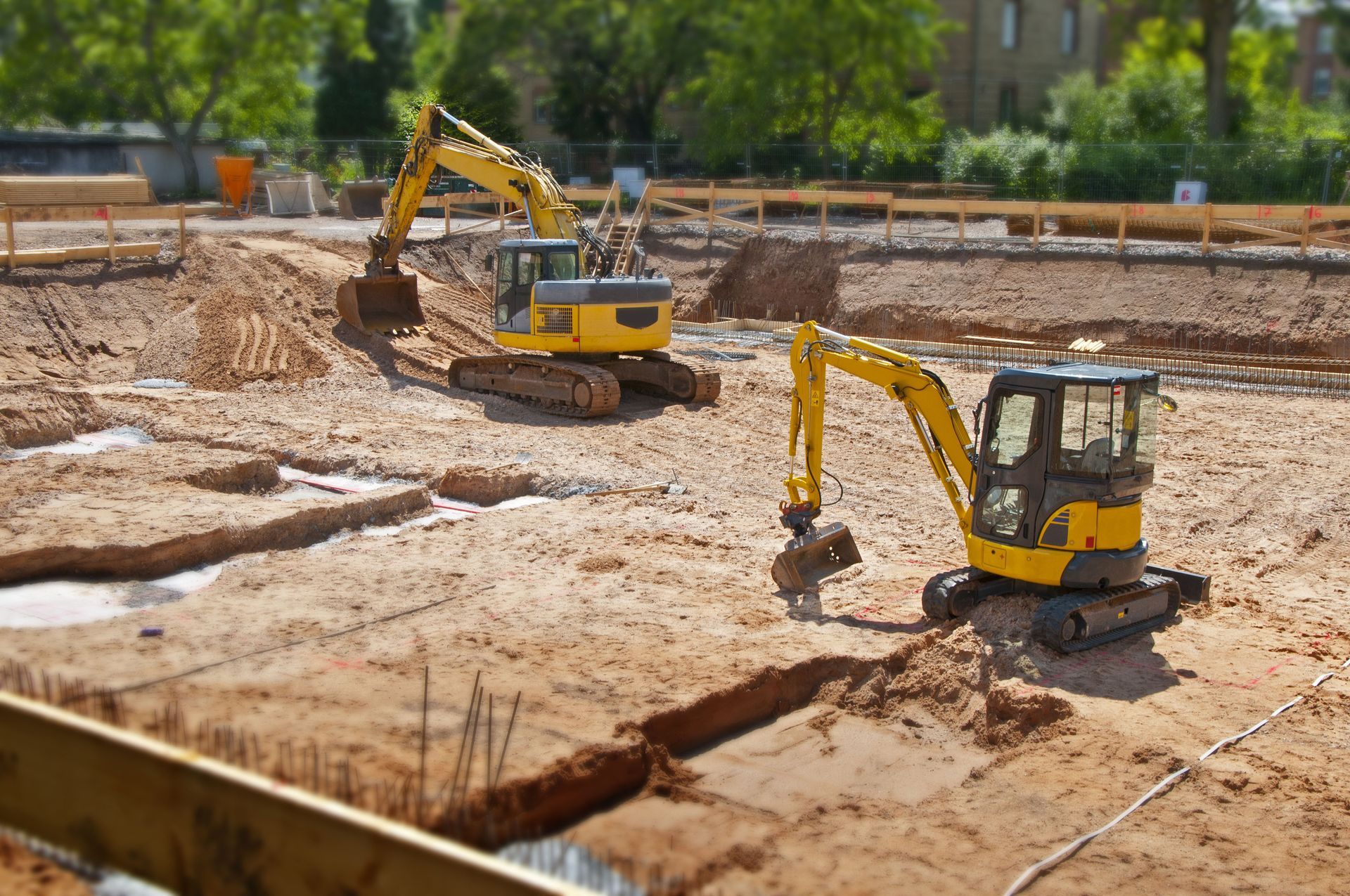
Transforming raw acreage into a workable construction zone requires the systematic removal of surface impediments, a process that establishes a clean canvas for subsequent trades. This phase involves stripping away dense brush, removing mature trees, and digging out deep root systems that could otherwise decay beneath future foundations and lead to localized ground collapse. Specialized machinery, including heavy-duty mulchers and industrial excavators, optimizes this clearing process while keeping nearby topsoil disruption to a minimum. Proper clearing ensures that the subsequent grading and utility excavation stages can proceed without encountering unforeseen physical blockages.
Managing the resulting organic matter and inorganic debris demands a sustainable and compliant approach to waste disposal. Modern site prep methodologies prioritize recycling, turning felled trees into commercial mulch or salvageable timber, and sorting concrete or masonry debris for crushing and reuse as aggregate base material. Adhering to local waste management ordinances avoids environmental fines and lowers the overall carbon footprint of the development. According to IBIS World, the U.S. excavation industry employs around 632,000 workers, highlighting the vast operational scale, specialized labor, and strict safety standards required to manage these major land-clearing and earthmoving operations nationwide.
Demolishing pre-existing infrastructure on brownfield sites introduces a unique set of logistical challenges that require meticulous hazardous material handling and structural control. Before mechanical demolition begins, crews must identify and safely remove hazardous substances like asbestos, lead paint, and historical industrial contaminants. Controlled dismantling techniques prevent structural debris from spilling onto adjacent properties and control airborne dust particles through continuous water-misting systems. This disciplined approach clears the path for new architecture while protecting the health of the local community and the surrounding environment.
Grading Land Surfaces and Establishing Drainage Paths
Reshaping the topography of a piece of land through precision engineering is essential for controlling surface water runoff and guaranteeing structural longevity. The grading process uses advanced earthmoving equipment guided by satellite telemetry to alter natural contours, creating flat building pads and uniform slopes. This engineering stage ensures that stormwater flows naturally away from structural foundations, retaining walls, and paved parking surfaces. Without accurate slope management, water can pool against concrete footings, accelerate soil erosion, and cause severe hydrostatic pressure that threatens below-grade walls.
Designing and building temporary and permanent drainage networks occurs alongside major earthmoving activities to mitigate erosion risks. Civil engineers plan retention basins, culverts, vegetated swales, and subterranean storm sewers to collect, filter, and release stormwater at controlled rates. During the active construction phase, implementing silt fences, check dams, and erosion blankets protects exposed soils from washing into local municipal water systems. This comprehensive water management strategy stabilizes the landscape, preserves water quality, and ensures the site complies with clean water regulations.
In regions featuring steep hillsides or highly unstable soil matrices, engineers must implement specialized slope stabilization methods to prevent landslides. Techniques such as building engineered retaining structures, terracing slopes, and using synthetic geotextile grids mechanically reinforce the earth. Deep-rooted vegetation is often planted along finished banks to provide natural stability against wind and rain erosion. By reinforcing vulnerable slopes during initial site prep, developers secure the entire site layout, allowing subsequent construction phases to proceed safely on dependable ground.
Installing Utilities and Building Subgrade Infrastructure
Integrating vital utility systems and deep subgrade infrastructure represents a critical transition from raw earth manipulation to vertical building support. This phase involves excavating deep trenches to place main lines for water, sanitary sewers, natural gas, electrical conduits, and telecommunications cabling. Coordinating this work requires a strict sequence of operations so that deep gravity-fed systems, like sewer lines, are set at precise elevations before shallower pressurized water and electrical lines are put in place. Mapping these networks with accurate geographical coordinates prevents accidental utility strikes during future maintenance work.
The installation of deep structural foundations, such as driven piles, drilled shafts, or thick concrete footings, depends entirely on the accuracy of the preceding earthwork. If subgrade soils are weak, crews may introduce chemical additives like lime or cement to improve soil strength before pouring concrete. Heavy compaction equipment continuously tests the density of backfill material around utilities and foundations to prevent future settling. This foundational layer transforms the natural ground into an engineered platform capable of supporting heavy structural loads over decades of use.
Managing the intersection of new infrastructure with existing municipal utility grids requires close cooperation with public works departments and local utility companies. Temporary bypass systems, careful utility mapping, and non-destructive hydro-vac excavation are used to expose active underground lines safely without causing service outages. Completing this complex subsurface network early reduces logistical conflicts above ground, allowing heavy cranes, delivery trucks, and framing crews to move around the site efficiently.
Optimizing Construction Workflows Through Strategic Site Prep
Thorough preparation before major construction begins functions as a predictive tool that directly improves project timelines, resource use, and overall profitability. By identifying subsoil anomalies, utility conflicts, and structural boundaries early, project managers can adjust procurement schedules and avoid expensive change orders. A well-organized site features designated staging zones for raw materials, clear access roads for heavy equipment, and dedicated parking areas for workers. This planned layout keeps logistical bottlenecks to a minimum and maintains high productivity from the first day of framing through final mechanical installation.
Ultimately, the long-term structural integrity and financial viability of any commercial or residential development rest on the quality of its initial site work. Skipping or rushing these fundamental steps to save upfront costs often leads to expensive structural issues, water intrusion, and premature material wear down the road. Thoughtful earthwork, robust drainage planning, and early utility integration provide the reliable baseline necessary for complex engineering to succeed. For more information about the services that we offer, reach out to our incredible team at Wyad Enterprises LLC today!